
When the Hospital Gets Quiet, the Work Gets Personal
Hospitals don’t really sleep, but at night, something shifts.
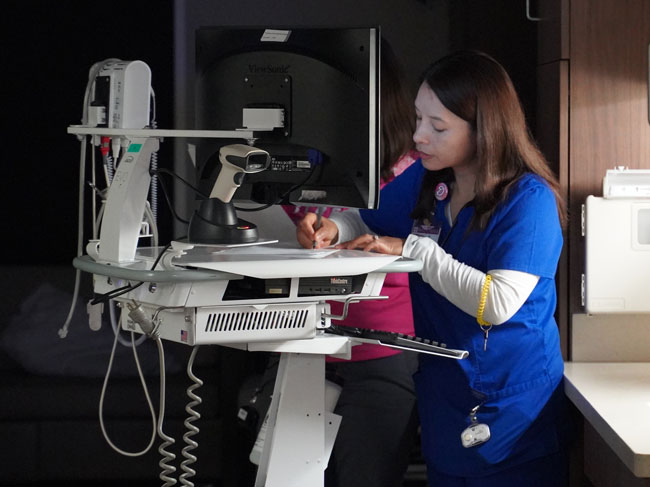
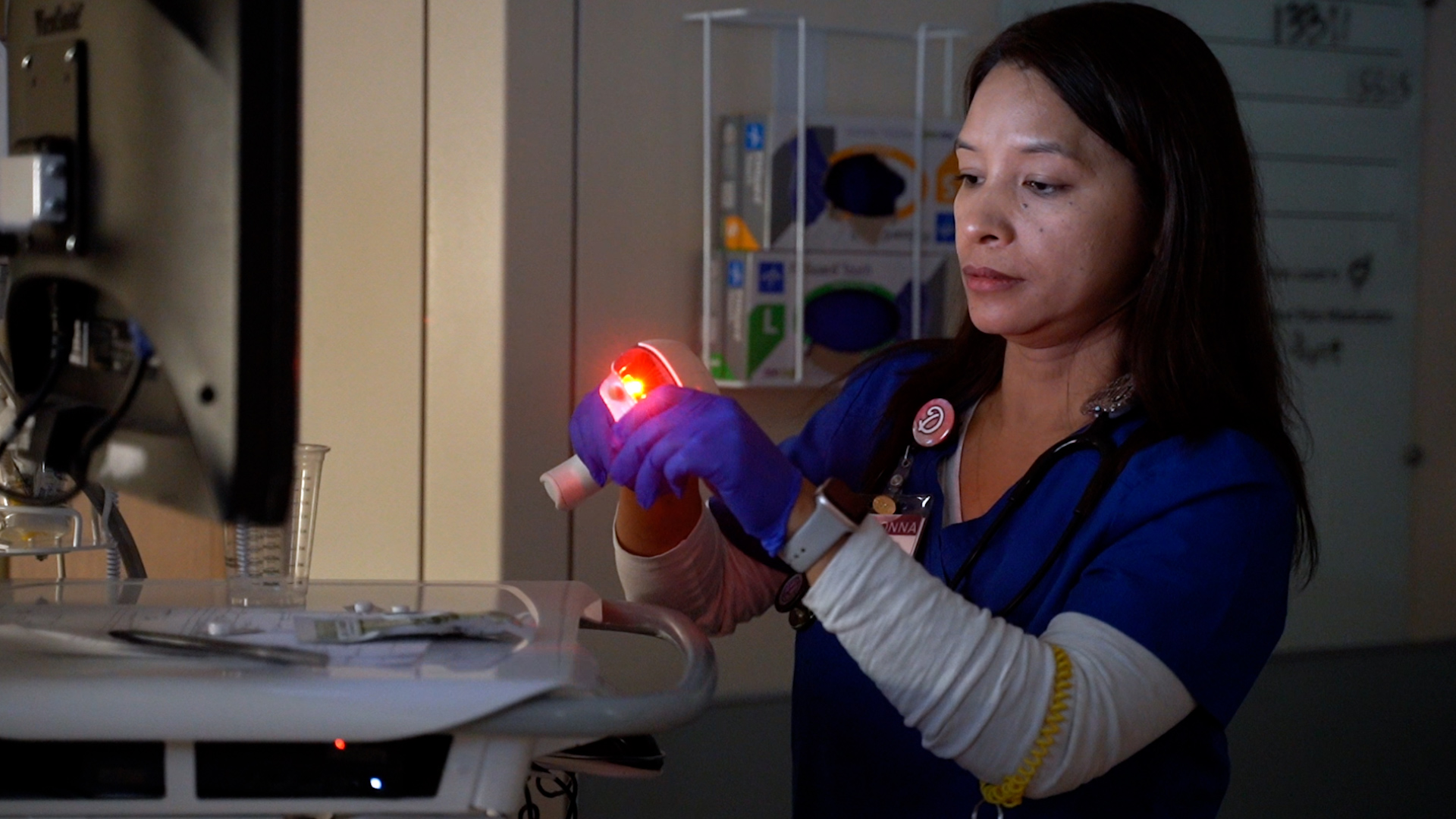
The pace changes. The lights dim. The therapy gym falls quiet. And for the night shift nursing staff at Madonna Rehabilitation Hospitals, that’s when some of the most meaningful work begins.
Renee Tillson, RN, BSN, CRRN, didn’t always see herself working nights.
“I said, ‘Oh, I will never work nights,’” she laughed. “And the night shift nurses said, ‘Try it. Just try it.’”
After 38 years as a nurse and decades of day shifts, Tillson made the change last year.
“I wish I had done it a lot sooner,” she said. “The camaraderie on night shift, it’s a different flow. You have more time to spend with your patients.”
A Different Kind of Care
Rehabilitation doesn’t stop when therapy ends for the day. In many ways, nighttime care is just as critical to a patient’s recovery.
“The first four hours of your shift are your hardest,” Tillson explained. “On day shift, your patient doesn’t care if you do their wound care at 2 pm. They do care if you do their wound care at 2 in the morning, so you’re trying to get everything done so they can get a good night’s sleep, because if they’re not sleeping at night, that’s going to hinder their progress with therapy.”
Sleep supports healing. Quiet reduces anxiety. Consistency builds trust.
“Not too long ago, one of the patients was very stressed out, overthinking his new situation,” Tillson said. “I pulled up a chair and talked to him for 20 minutes. You can’t do that on day shift.”
She didn’t offer a grand speech or a life-changing answer.
“I didn’t really talk — it was more listening,” she said. “Just taking that time. During the night I checked on him. He slept soundly.”
Sometimes the most powerful care is simply presence.
“There Is No Such Thing as ‘Not My Patient.’”
Night shift nurses will tell you the workflow is different, but so is the team dynamic.
“Not only on night shift do we take care of our patients, but we also take care of each other,” Tillson said. “There is no such thing as, ‘Not my patient.’ We’re all watching out for the patients. We’re working together as a team.”
If someone has a particularly complex case, others step in. With fewer specialists on staff at night, resourcefulness kicks in. If the night feels long, humor carries the team through.
Christina Nimmo, RN, describes night shift nurses as “very self-motivated, very caring, funny.”
“A good night shift nurse is someone who doesn’t do well getting up early in the morning,” she joked. “We are people who can just chug through in the crazy hours of the night and keep each other going.”
As a weekend night supervisor, Tillson is intentional about being hands-on.
“I don’t want to lose that aspect because I still enjoy being a bedside nurse,” Tillson said. “I want my team to know that I am in this with you. You are not alone.”
Night shift requires independence with fewer people working, but it also requires collaboration and creativity. Tillson says she often gets to demonstrate Madonna’s core value of teaching during night shift. She is able to take the time to teach a younger nurse how to do a specific type of wound dressing change or help a certified nursing assistant pass meal trays.
“It’s a pace you can learn,” Tillson said. “You’re busy, but it’s manageable.”
And for some, it’s transformative.
“You won’t know unless you try,” she added. “One or two shifts isn’t going to tell you if it’s for you. Give it six months. Get into a routine and see.”
For Nimmo, night shift gave her the most time to be with her kids throughout the week. She’s been at Madonna for seven years, all on night shift. Self-scheduling means she gets to choose what works best for her family and find strong work-life balance.
More Than a Shift
During the day, therapy sessions push patients physically. At night, nurses often help them process everything emotionally. When there isn’t therapy filling every minute, patients think – and worry – about their future. Night shift nurses are there for those conversations.
Sometimes that looks like coordinating complex clinical care. Sometimes it looks like teaching a new skill. And sometimes, it looks like pulling up a chair and simply listening.
For Tillson, that’s what makes the difference.
When the hospital gets quiet, the work doesn’t slow down. It just gets more personal.
Night shift isn’t for everyone. But for those who thrive in a close-knit team, who value independence balanced with collaboration, and want a steady workflow, it can be exactly the right fit. Night shift at Madonna offers more than a schedule change. It offers space to practice nursing in a way that feels collaborative, intentional and deeply personal.