When Mario Zacarias arrived at Madonna Rehabilitation Hospitals following a diagnosis of Guillain-Barré syndrome (GBS), a rare neurological condition, the independent 18-year-old faced challenges he had never imagined.
Before becoming ill, Mario enjoyed working out, playing football and spending time with friends. Then GBS took away the strength and mobility he relied on every day. As he began inpatient rehabilitation, simple tasks that had once seemed routine became major milestones.
“When I got sick, I couldn’t move,” Mario said.
Mario arrived at Madonna requiring assistance simply to sit on the edge of the bed.
“His strength was really limited and his tolerance to sitting was pretty limited and the use of his limbs was also limited,” Lauren Cox, OTD, OTR/L, Mario’s occupational therapist said. “He was requiring a lot of assistance to move, to transfer, and to complete any of those self-care activities.”
Mario’s care team says he has both age and activity level on his side when it comes to his recovery. He also had an inner drive to achieve his goals. But his care team wanted to start him out slowly. While his rehabilitation journey was only beginning, Mario’s mindset was clear.
“I didn’t even have a walking goal for him or a stair goal at the start because we weren’t sure what things were going to look like,” Bailey Leversee, PT, DPT, Mario’s physical therapist, said. “But we knew from the start that he was going to work really hard and so anything was achievable for him.”
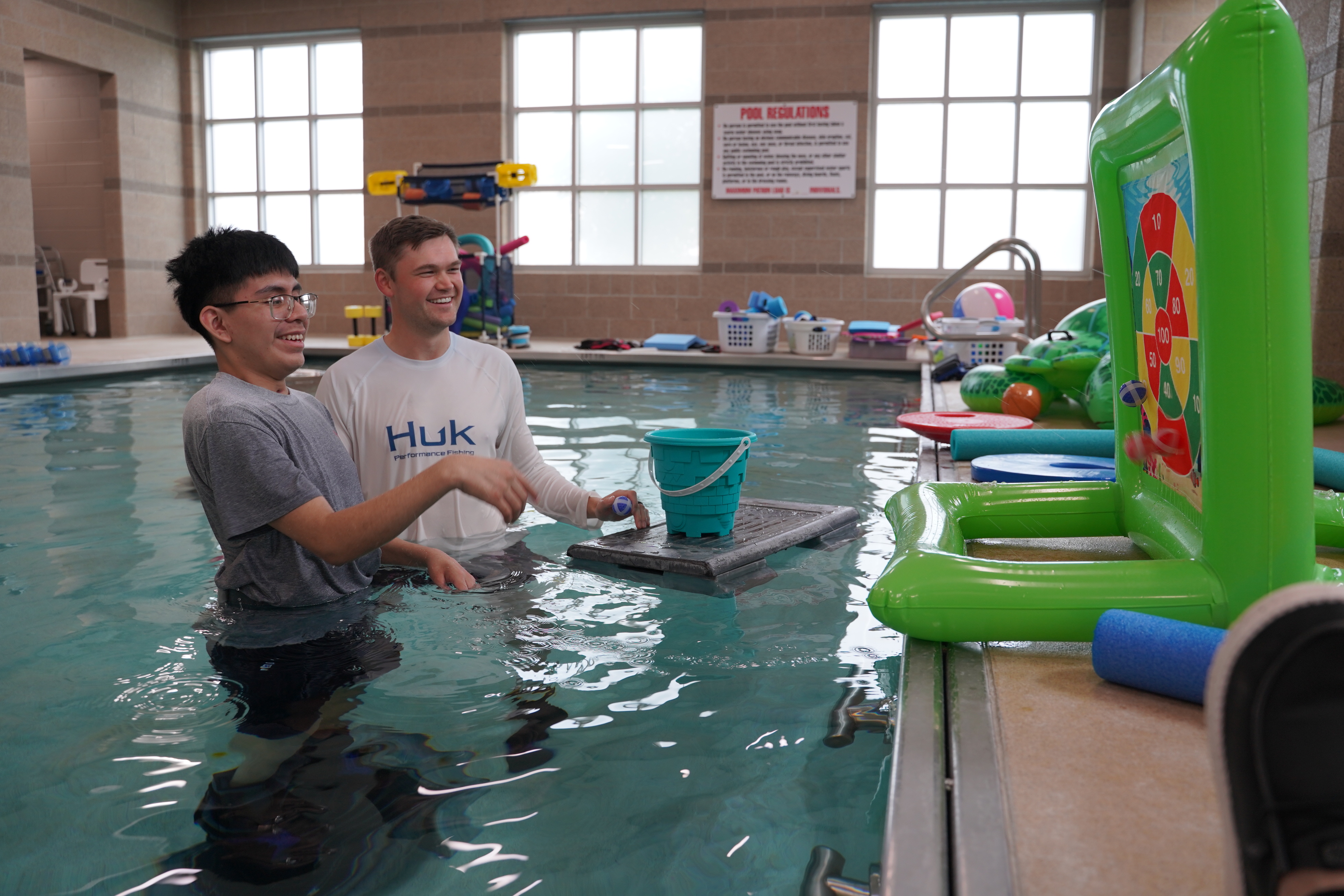
That determination became the driving force behind his recovery. Day after day, Mario pushed through therapy, steadily building strength, endurance and confidence.
“I just feel like I’ve got to do what I’ve got to do,” Mario said.
Quickly, goals expected to take weeks were achieved in a matter of days.
“Week after week, he just kept crushing my goals,” Cox said. “He was constantly pushing forward and making significant progress. It was fun to watch how one little thing triggered another thing that he thought he could do and then he’d work at it, work at it, work at it, and then get it in a couple days.”
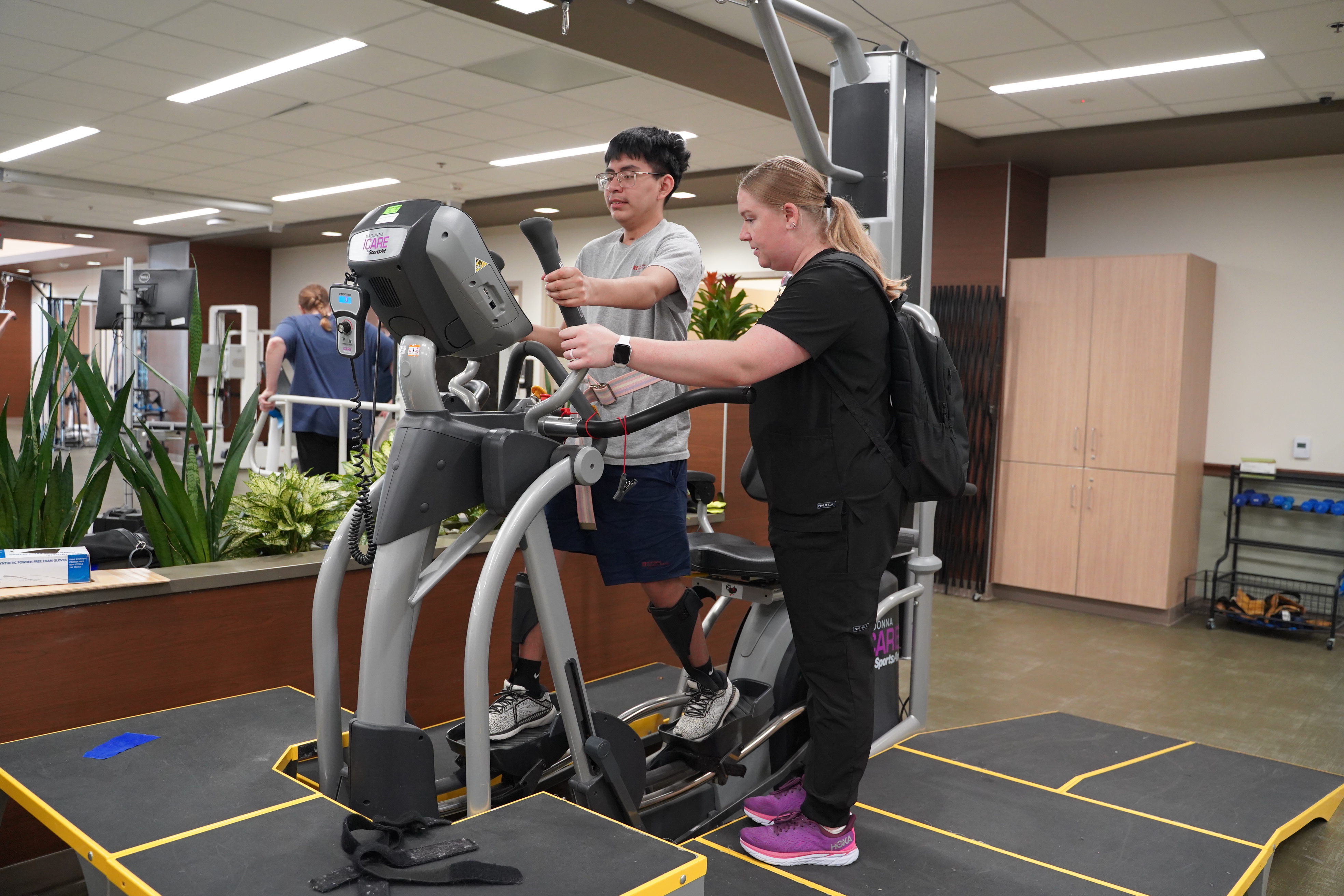
Specialized technology like the functional electrical stimulation (FES) bike helped the muscles in Mario’s arms and legs wake up and start to coordinate with each other again. The LiteGait bodyweight support system helped him get mass repetition of steps, even when he wasn’t able to stand on his own.
“He was only able to do five steps at a time before fatiguing and his heartrate would elevate quite a bit,” Leversee said. “We had to take very, very frequent rest breaks, so activity tolerance was a big thing that we really needed to work on before we could progress with a lot of his mobility skills.”
As his mobility improved, Mario began focusing on regaining independence. He wanted to return to the life he had built before his illness, including going back to work.
Through Madonna’s work re-entry programming, he practiced the skills needed to return to employment and prepare for life after rehabilitation.
“I used to work at Culver’s,” Mario said. “I have been working at Madonna’s cash register [in the cafeteria] so I can be ready to get back to work,”
By the time he was preparing for discharge, the transformation was remarkable.
“He went from being almost completely dependent for any arm and leg movement to walking out of here with a walker and doing all of his self-cares independently,” Cox said.
For Mario, the accomplishment wasn’t just the progress he made. It was the effort it took to achieve it.
“I’m proud of myself that I can push myself hard to improve my strength to walk and my goals,” he said.
In the end, the promise Mario made when he first arrived at Madonna became reality. The young man who once needed help sitting at the edge of the bed left with renewed independence, confidence and the skills to move forward.
And, just as he said he would, he walked out.