
When Ismael De La Torre felt a sudden, crushing pain in his chest on Dec. 21, he knew something was seriously wrong. Within hours, he underwent a 14-hour emergency surgery for a life-threatening condition that would change everything.
Doctors at Kansas Medical Center in Andover, Kansas, quickly diagnosed him with an aortic dissection — a tear in the body’s main artery.
“When a tearing like that occurs, it compromises blood flow to the rest of the body, because that’s the first major artery that comes off of the heart,” Dr. Paul Krabbenhoft, Madonna’s spinal cord injury medical director, said. “So, in his case, that damaged the blood supply to his spinal cord, resulting in weakness and numbness in his arms and legs.”
The result was an ischemic spinal cord injury, leaving Ismael with significant limitations in strength and mobility.
“I couldn’t do much,” Ismael said. “I forgot how to walk and balance.”
The condition was made more complex by additional cardiac and health concerns.
“It’s a very complicated and life-threatening type of injury,” Krabbenhoft said. “Ismael did develop congestive heart failure symptoms with increasing swelling and shortness of breath. So, internal medicine was involved managing those critically important aspects of his conditions while we were rehabbing a spinal cord injury.”
After weeks of hospitalization and dialysis, Ismael was ready for the next step in his recovery —specialized medical rehabilitation.
Knowing what he had been through, Ismael began searching for programs that could meet his complex needs.
“Everybody I talked to said this is where I needed to be,” Ismael said. “So, I called and really got the ball rolling.”
That decision led him to Madonna Rehabilitation Hospitals, where patients with complex medical and functional needs receive coordinated, interdisciplinary care designed to adapt to each individual.
For Ismael, the decision was also deeply personal. Living in Wichita, Kansas, he is a father of four and a field mechanic — roles that quickly became central to his motivation for recovery.
“I’ve got three boys and a girl. They’re everything to me,” Ismael said. “I’m a field mechanic and I try to keep equipment running as best as I can.”
At Madonna, Ismael’s recovery required constant coordination, balancing ongoing medical management with intensive rehabilitation aimed at restoring function and independence.
Therapists worked closely with physicians and nurses to monitor his condition, including his cardiac status, while gradually increasing the intensity of therapy as he tolerated more activity.
“We really had to be more aware of his vitals and more aware of his heart rate,” Katelyn DuPont, OTD, OTR/L, a Madonna occupational therapist, said. “He had a pacemaker. So, making sure he wasn’t overdoing it.”
Occupational therapy became a key part of his recovery, focusing not only on strength, but on the everyday skills he would need to return home, to work and to family life.
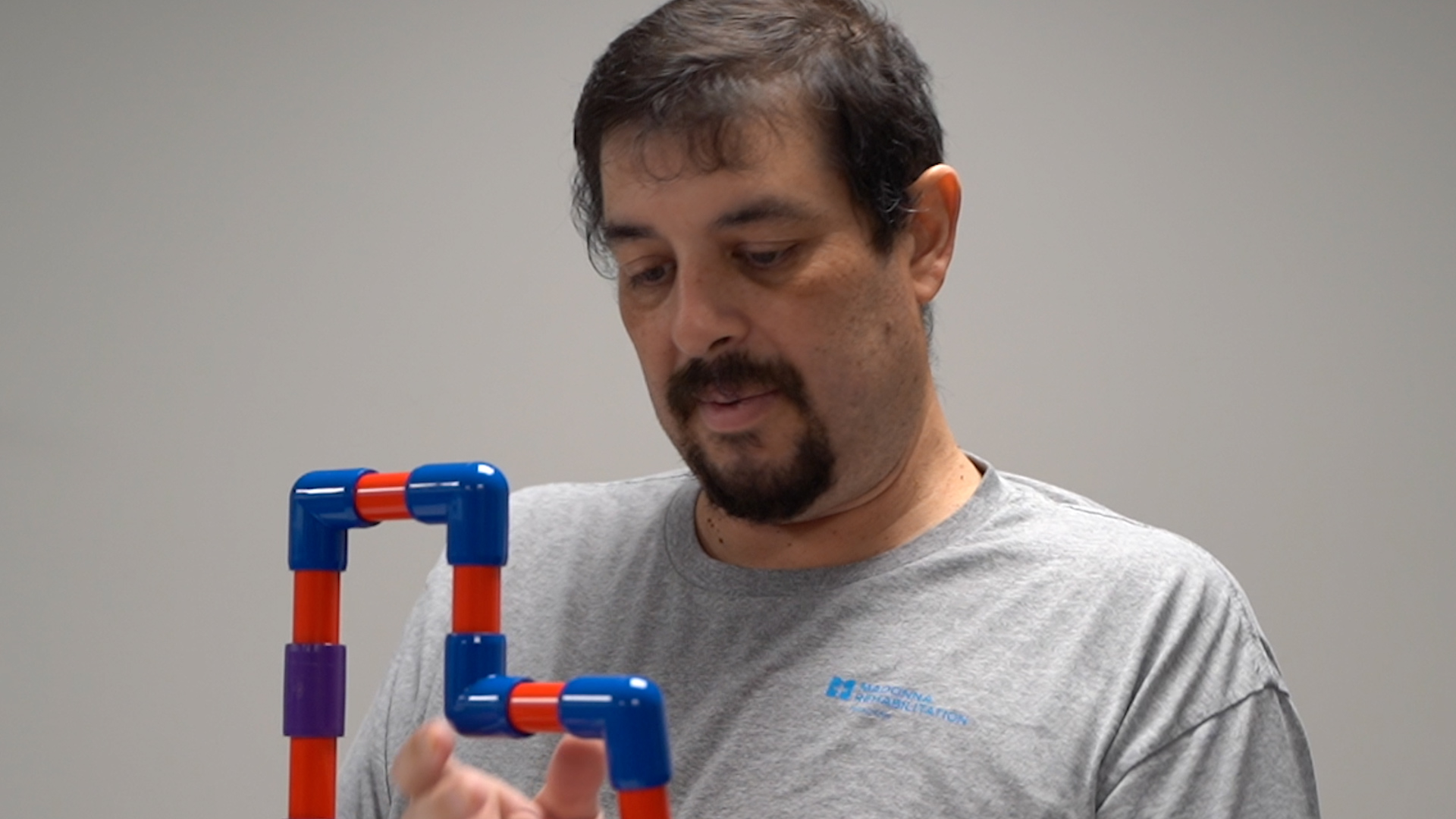
“He was pretty weak in his legs, his arms and his hands,” DuPont said. “We focused on the hands at first but quickly realized that we were going to need to continue challenging him.”
Those challenges were directly tied to his job as a mechanic, where fine motor precision is essential.
“She made me build a treehouse with screws and a screwdriver,” Ismael said. “With electrical and the panels we pull out, they always have tiny nuts and screws, so working your fingers was real good.”
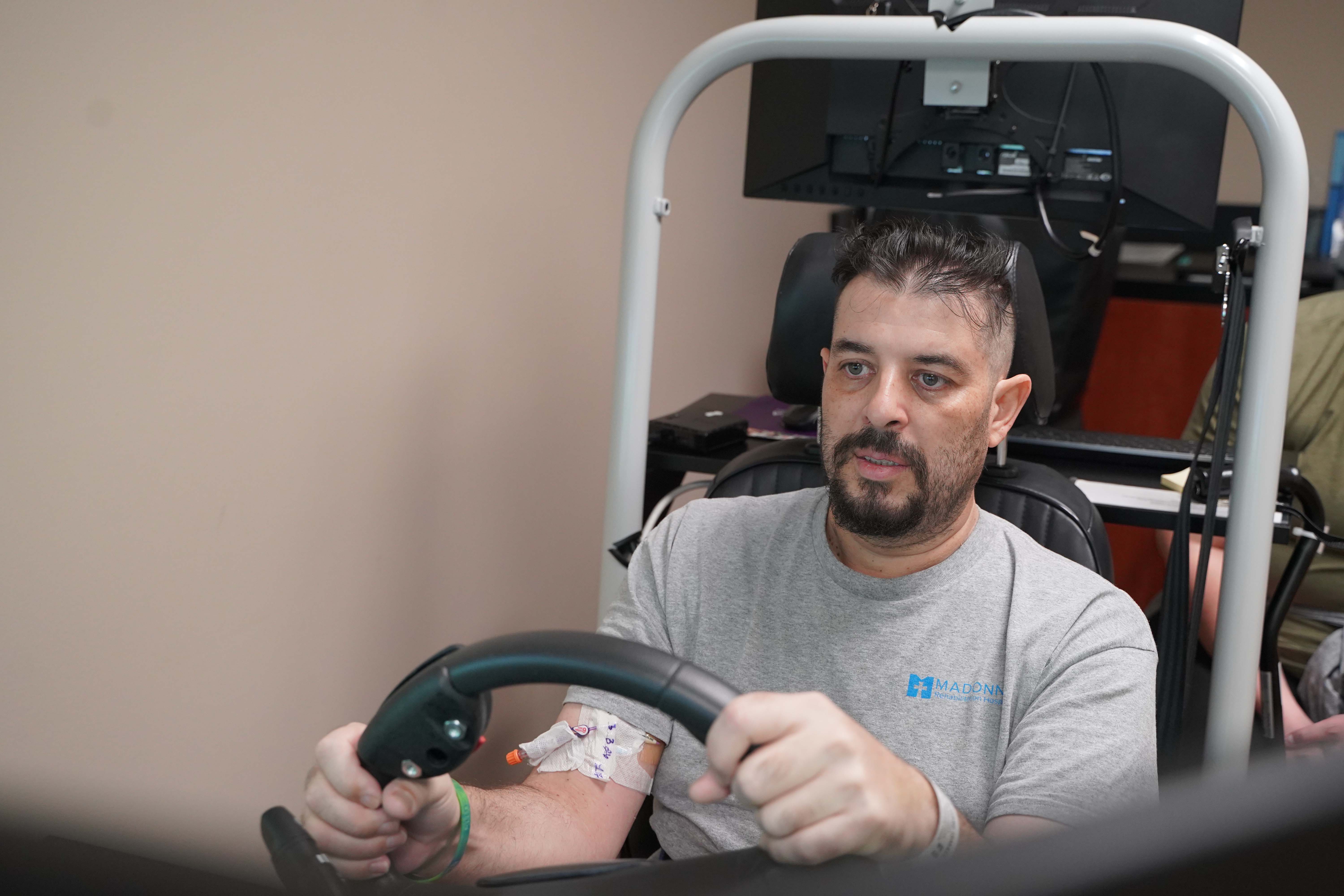
As his abilities improved, therapy expanded beyond the gym and into real-world environments designed to mirror daily life. Ismael participated in activities in Madonna’s Independence Square, a simulated community setting, and used a driving simulator to prepare for eventual return to driving.
“We wanted to put that into real life and get him out into the community, whether it was cooking, driving or grocery shopping,” DuPont said.
Throughout it all, Ismael’s determination remained constant.
“He was one of those patients where we actually had to say, ‘Okay, with your cardiac history, let’s take a break,’” DuPont said. “He wanted to go, go, go. He really wanted to get back to work, get back to his kids and get back home.”
That persistence, combined with strong family support, helped drive his progress forward.
“Mainly my family… that’s what kept me going,” Ismael said.
Step by step, he regained strength, mobility and independence — and with it, a growing sense of possibility for what life after Madonna would look like.
“I have a lot of confidence now being out in the world,” he said.