
Advancing the Understanding of Wearable Robotics
Every day, physical therapists help people navigate mobility challenges and achieve goals that matter to them, whether that’s returning home after an injury, moving through their community more confidently or participating more fully in daily life
As we celebrate National Physical Therapy Month, we are reminded that the future of rehabilitation depends on both innovation and expertise. Technology provides new tools, but it is the knowledge of rehabilitation professionals that transforms those tools into meaningful outcomes for patients.
At Madonna Rehabilitation Hospitals, clinicians and researchers are working together to explore new technologies that may expand those possibilities.
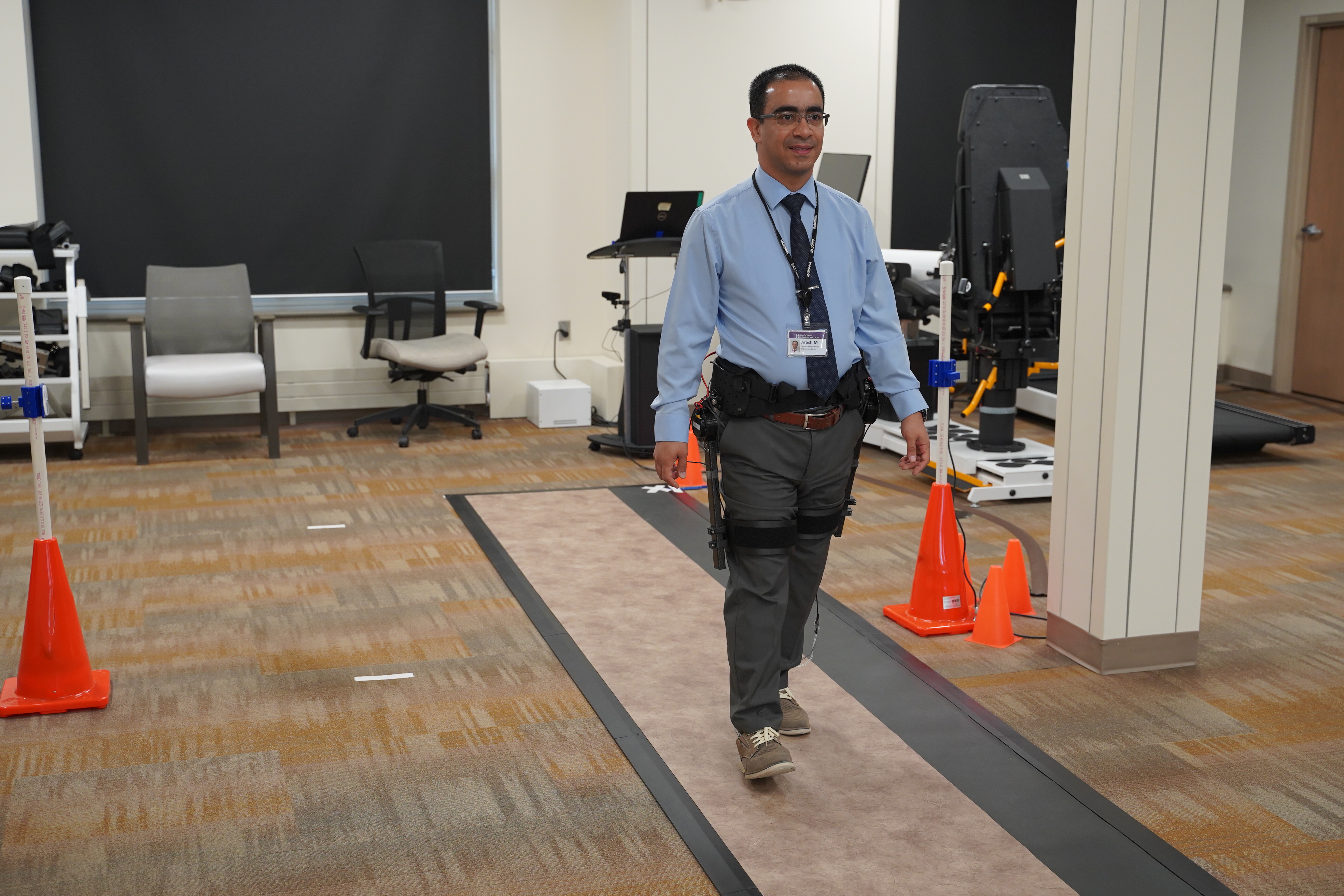
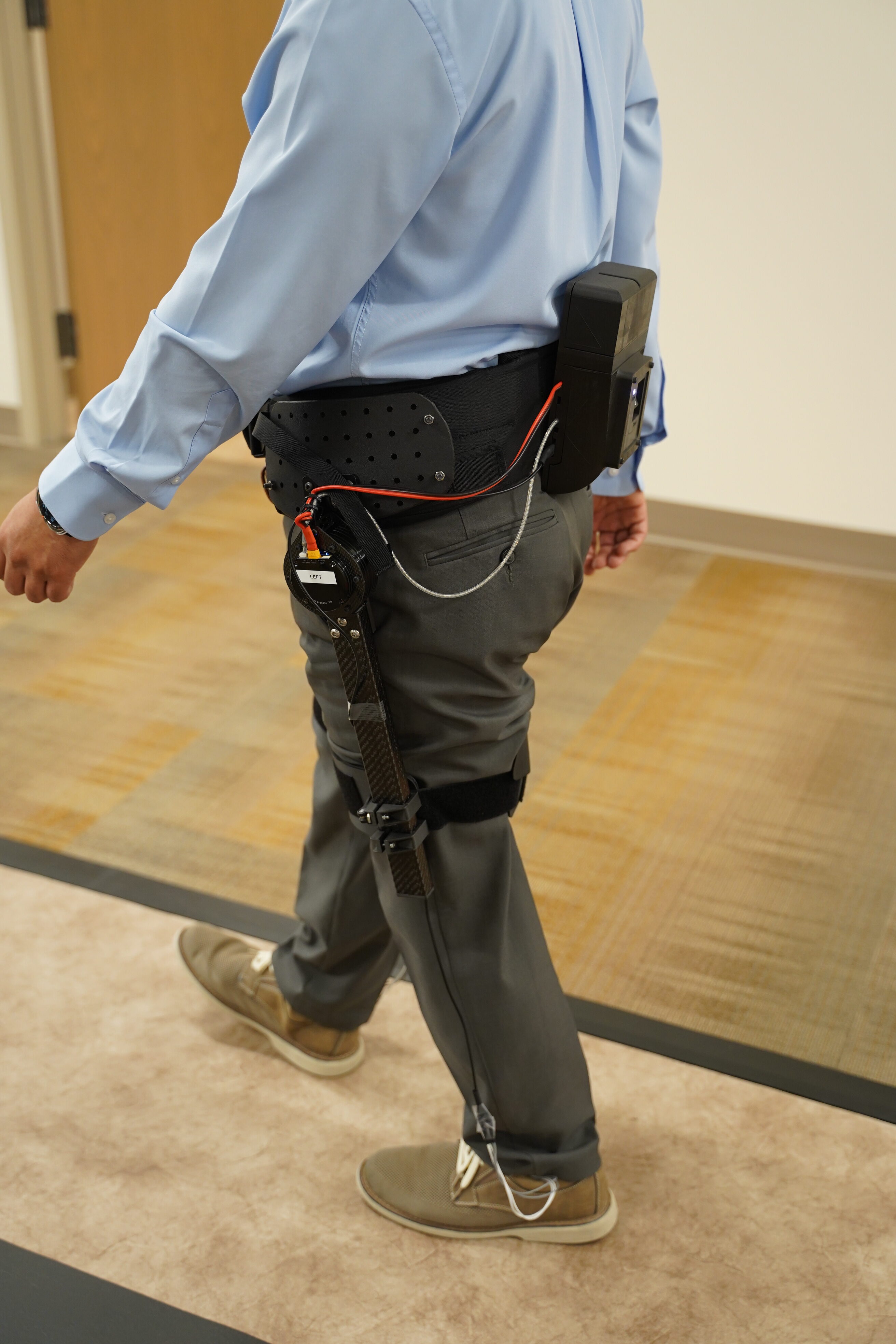
A recent study published in Scientific Reports highlights that commitment to innovation. Led by Madonna Research Institute’s Director of Translational Rehabilitation Technology, Arash M. Gonabadi, PhD, MS, and research partners from the University of Nebraska Omaha, the study examined how a powered hip exoskeleton influences walking stability.
Because hip muscles play a critical role in balance, limb advancement and gait efficiency, researchers sought to better understand how robotic assistance affects the body’s ability to maintain stability while walking.
Measuring Gait and Balance
The research team evaluated healthy adults walking with a hip exoskeleton under multiple assistance settings. Using advanced gait analysis techniques, they measured changes in walking stability, step characteristics and movement patterns.
The findings showed that exoskeleton assistance increased measures of dynamic stability in both forward-backward and side-to-side directions. Participants demonstrated a larger margin of stability, suggesting a greater buffer against loss of balance while walking.
The researchers also observed changes in gait patterns, including wider and more variable steps. These findings underscore an important principle familiar to rehabilitation professionals: movement is highly adaptable. As individuals interact with assistive technologies, they often develop new strategies that influence performance and outcomes.
This is significant because clinical rehabilitation has long relied on a combination of therapeutic exercise, gait training, balance interventions and technology-assisted treatment. As robotic systems become more sophisticated, understanding how these technologies influence movement is crucial. Research helps ensure that emerging tools are applied in ways that support functional recovery rather than simply adding high-tech complexity.
Shaping the Future of Mobility
While the study involved healthy young adults, it contributes valuable knowledge to the growing body of evidence surrounding wearable robotics and mobility rehabilitation. Future research will help determine how similar technologies could support older adults, individuals with neurological conditions and others at elevated risk for falls.
By contributing to research that explores the next generation of mobility interventions, Madonna continues its mission of helping people build independence, improve function and move forward with confidence.