Dustin Strecker never expected a drive to work would alter the course of his life.
After working long hours and struggling to get enough sleep, the 29-year-old from Osage City, Kansas, fell asleep behind the wheel on the early morning commute.
“My car flipped onto its left side,” he said. “I broke my sternum, eight ribs, lacerated my spleen and my liver, lost my left arm, broke my femur in two spots, broke my femoral neck and fractured the vertebrae that connects to my skull.”
It took first responders an hour and a half to free him from the wreckage.
Then, during emergency surgery at Stormont Vail in Topeka, Kansas, things became even more complicated.
“I had eight strokes and they had to give me ten pints of blood,” Dustin said. “I was in a medically induced coma for two to three weeks.”
When he finally woke up, he had a tracheostomy, a feeding tube and an uncertain road ahead.
As his condition stabilized, Dustin and his family began searching for the next step in his recovery.
“We were trying to find a place that could give me some sort of life after the accident,” he said. “They either said Madonna or a nursing home, and we chose Madonna.”
Complex Injuries Require Specialized Expertise
Dustin wasn’t recovering from a single injury. He was recovering from the combined effects of an upper-arm amputation, multiple orthopedic injuries, internal trauma and eight strokes.
At Madonna, one team focused on stabilizing his medical condition, while another was preparing him for rehabilitation. Physicians, nurses, therapists and specialists worked together simultaneously to address the many effects of his injuries to help him move forward.
“The nice thing about Madonna is that we have the ability to incorporate multiple different disciplines at the same time,” Dr. Matt Driewer, a Madonna internal medicine hospitalist, said.
That level of coordination and co-treatment across physician team was essential given the complexity of Dustin’s condition.
“It was amazing that he survived his car accident to begin with,” Dr. Adam Kafka, physiatrist and medical director of Madonna Rehabilitation Hospital-Lincoln, said. “When you have multiple diagnoses—not just a stroke, not just medical injuries, not just an amputation; but all of those in one person–specialized care addresses them all together.”
Madonna’s team was able to address both Dustin’s orthopedic and neurological rehabilitation at the same time, helping him recover from limb loss while rebuilding strength, mobility and function affected by his strokes.
The First Signs of Progress
When Dustin arrived at Madonna’s Specialty Hospital, even the most basic tasks required assistance.
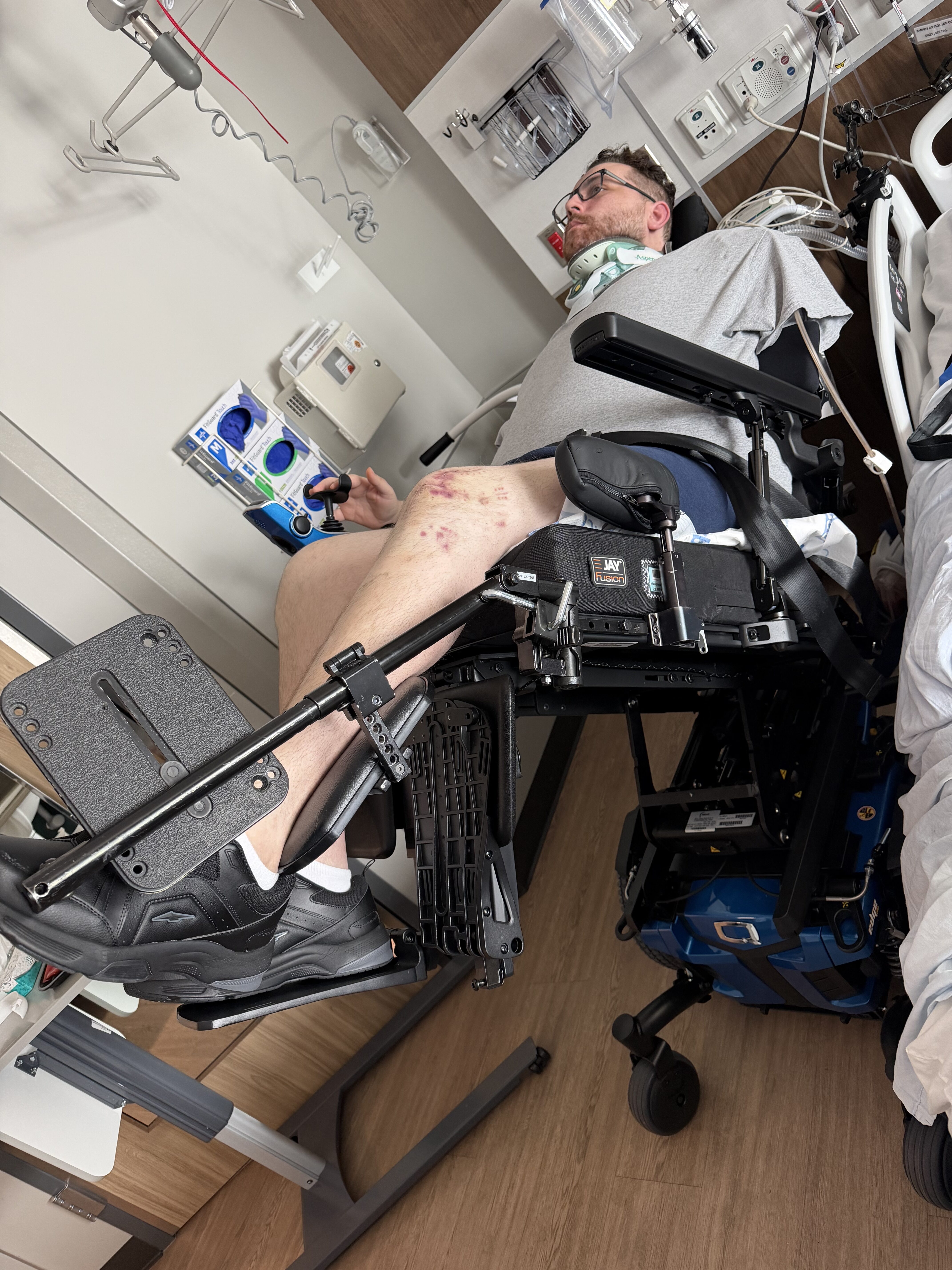
“When I got here, I was in an electric wheelchair that I could barely operate and it took a lift to get me in and out of bed because my leg and arm didn’t work,” he said.
As Dustin progressed through his recovery, collaboration among his care team remained critical.
“It was just trying to find the balance between continuing to push him but also acknowledging the fact that his body has been through so much,” Sara Hohensee, PT, DPT, CBIS, a Madonna physical therapist, said. “He was always willing to keep doing what was asked of him despite having pain and the residual weakness from his strokes.”
Even in those earliest days, progress began to emerge.
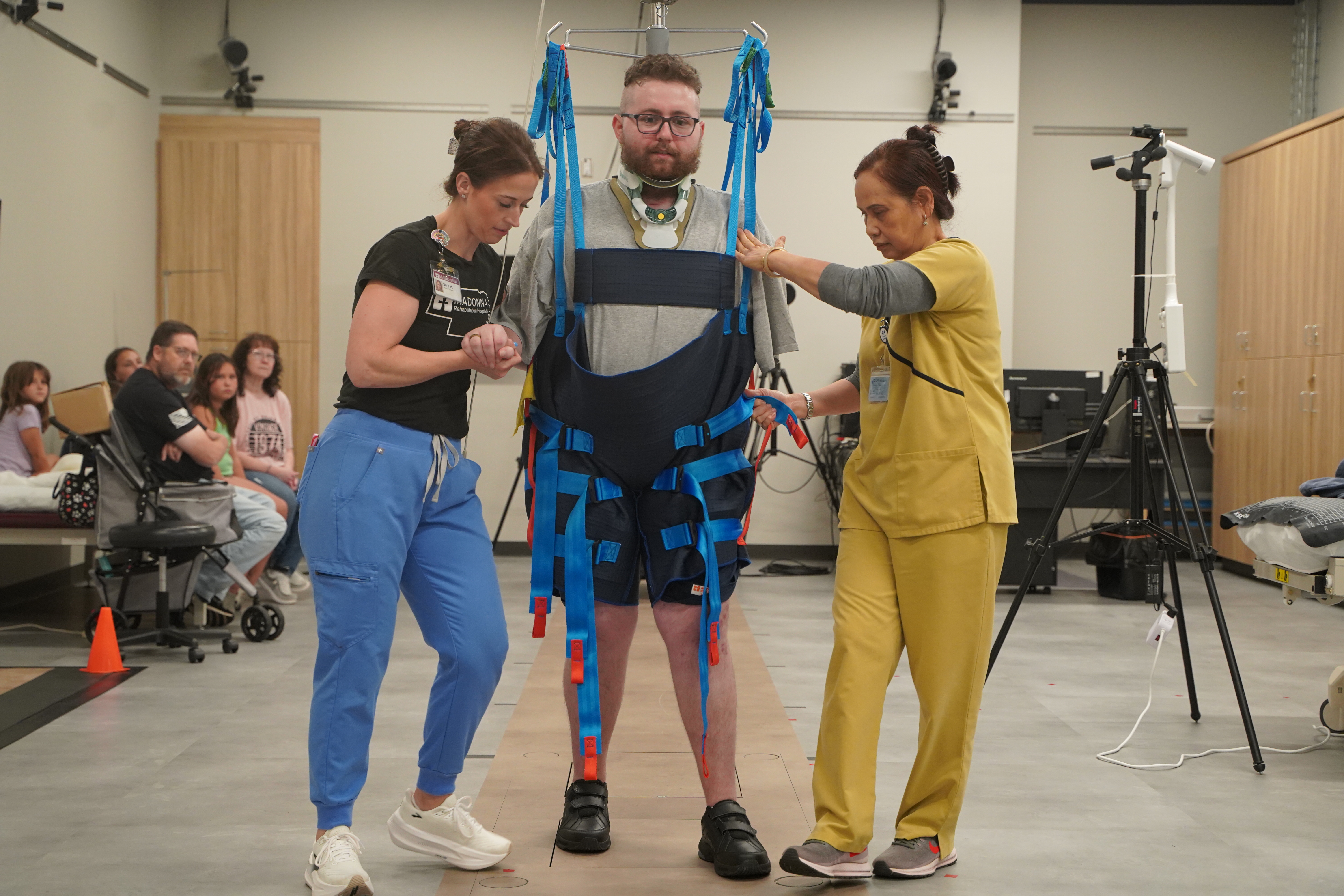
“They got me strapped into the LiteGait and I was able to take my first steps in four months,” Dustin said.
Those first steps represented more than mobility. They represented the beginning of a future that once seemed uncertain.
Rebuilding Mobility
As Dustin transitioned to Madonna’s Rehabilitation Hospital, the focus shifted toward rebuilding strength, mobility and independence.
And traditional approaches weren’t always an option.
“With his amputation, a lot of the mobility devices we typically start patients with weren’t options,” Hohensee said. “That was a whole new barrier we had to work our way through.”
Using advanced rehabilitation technology, a warm water therapy pool and creative problem-solving, the interdisciplinary team developed strategies tailored specifically to Dustin’s needs.
“We did a lot of body-weight-supported standing and walking to really get Dusty stronger and help improve his balance and his activity tolerance,” Hohensee said.
The progress continued to build.
“To go from an electric wheelchair to a cane is almost unheard of,” Dustin said. “And we were able to do that. Now I don’t need a cane or anything to walk.”
Learning Life After Limb Loss
Recovering mobility was only part of Dustin’s journey.
At the same time, he was also preparing for life after limb loss.
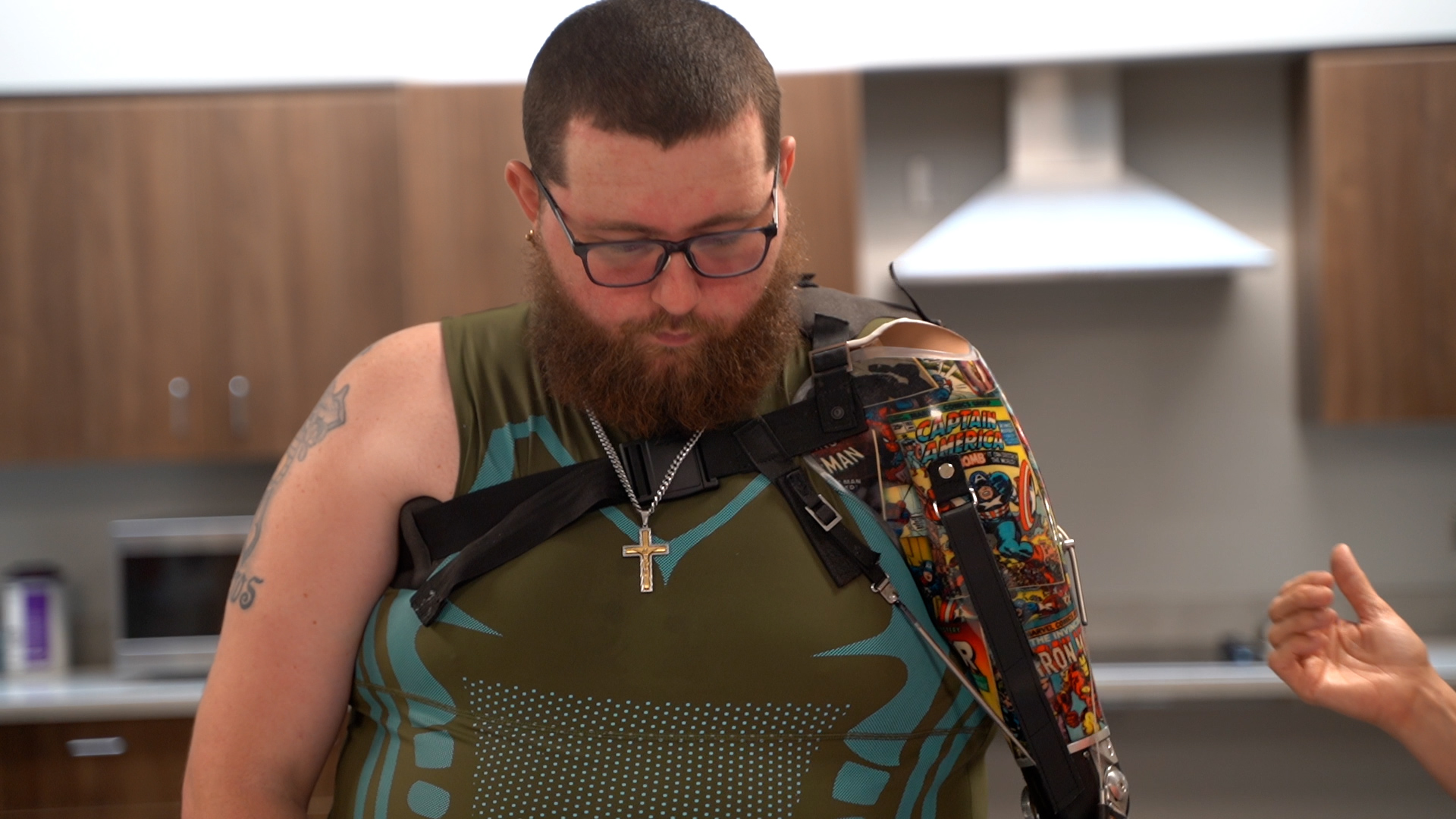
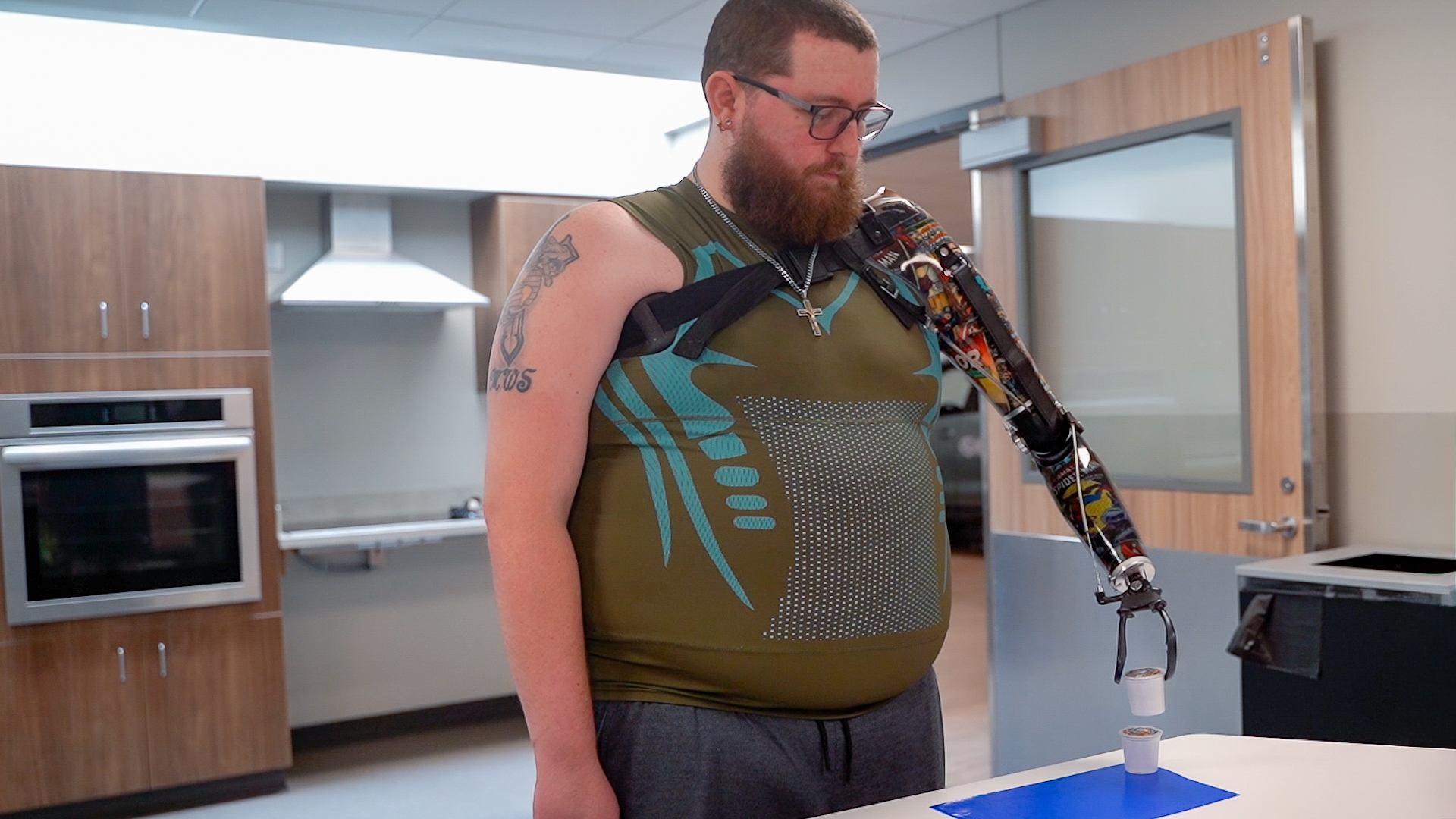
Through Madonna’s on-site partnership with Hanger Clinic, prosthetic care was integrated into his rehabilitation plan, allowing therapy goals and prosthetic training to progress together.
The process began long before Dustin received his prosthesis.
“Initially they started out with getting me a silicone sleeve that would basically size my nub to be able to fit into a prosthetic without rapidly changing,” Dustin said. “After a couple of weeks, they molded my arm, made a cast of the mold, fit it and made sure that it was right, making as many adjustments as needed.”
For Dustin, the prosthesis represented more than a piece of technology. It became an important tool for maintaining independence and protecting the arm he now relies on most.
“Doing everything with one hand would deteriorate it quickly,” he said. “Whereas if I have my prosthesis, it’s less wear and tear on my right side because that’s going to be my main side.”
It also helped him tackle everyday activities that would otherwise be significantly more challenging.
“It gave me a tool to do everyday tasks that would be harder to do with just one hand,” Dustin said.
While his residual limb healed and prepared for prosthetic use, rehabilitation efforts continued to focus on strengthening the right side of his body, which had been affected by the strokes.
“He was really able to use the training and the exercises and the therapy from the team to learn how to get through the world with essentially one arm as your main source of performing self-care and feeding yourself,” Kafka said.
Building on Every Success
Through Madonna’s continuum of care, he progressed from the Specialty Hospital to the Rehabilitation Hospital and eventually the Rehab Day Program, building on each milestone along the way.
“Being able to work through the full continuum of care allowed him to continue progressing and not let off the gas pedal,” Hohensee said. “That’s what research shows gives us the best chance at that neuro recovery following stroke and amputation and it paid off for him.”
For Dustin, each level of care helped him regain a different part of himself.
“They taught me how to feed myself,” he said. “Then they taught me how to be myself. And Rehab Day let me be myself for the first time in six months.”
A Life Reclaimed
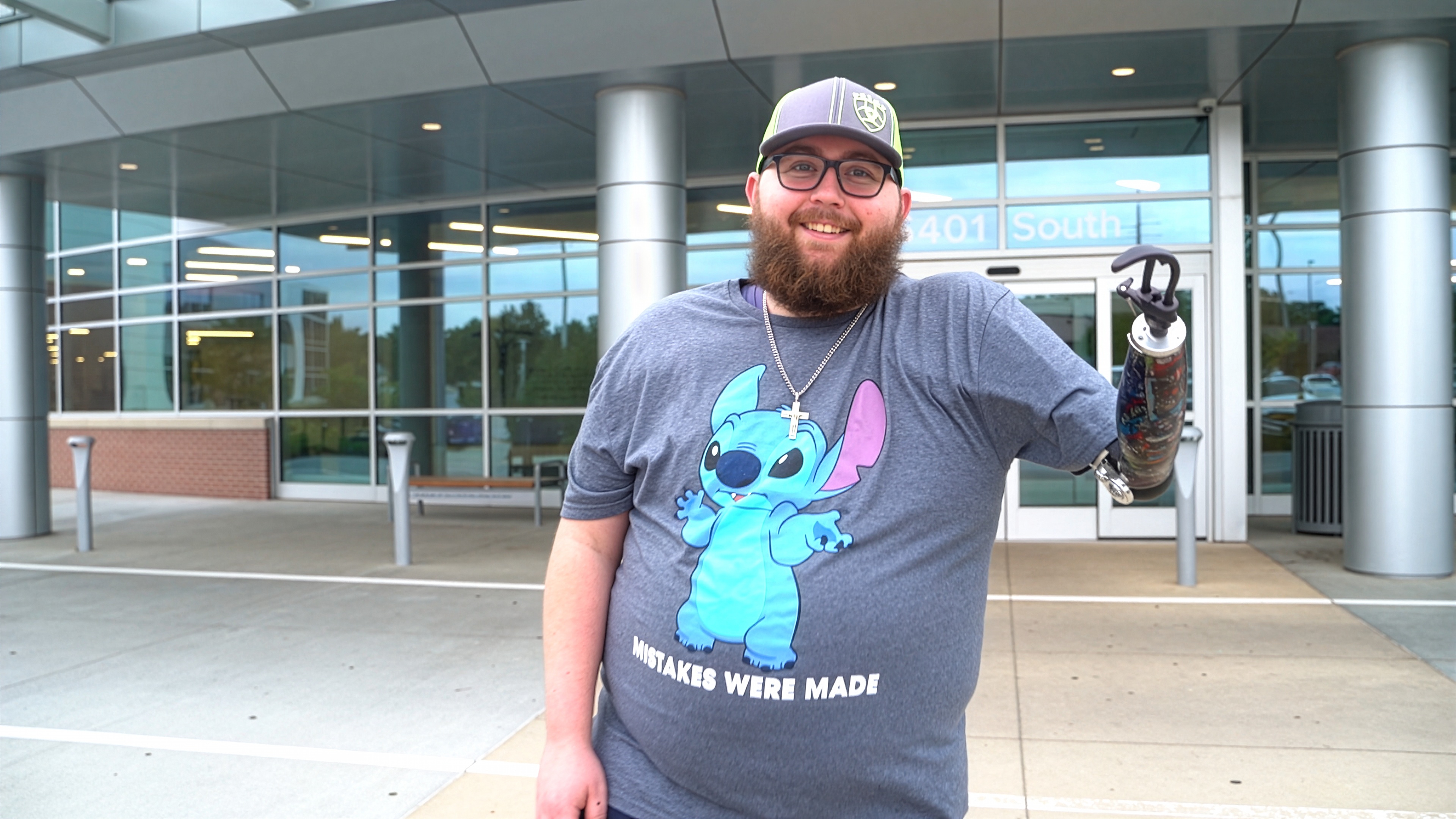
Today, Dustin is walking independently. He’s using a prosthetic arm. He’s continuing to build a future that, at one point, seemed out of reach.
Looking back on everything he’s overcome, one thought still comes to mind.
“It was worth all the effort I put in every day because Stormont Vail saved my life and Madonna gave me my life back.”