As an outdoor education specialist with the Nebraska Game and Parks Commission, 34-year-old Grace Gaard loves to stay active, spend time in nature and encourage the next generation of conservation enthusiasts. In August, the Eagle, Nebraska native was working out in her home gym when an arteriovenous malformation (AVM), an abnormal tangle of blood vessels, ruptured, causing a stroke and bleeding in her brain, leaving her with significant weakness on her right side. She spent two weeks in the ICU at Methodist Hospital, then when she was medically stable, moved to Madonna Rehabilitation Hospitals to begin rehabilitation.
“It was uncertain how that was going to turn out for a while,” Grace said. “It’s been a long process since then.”
Having spent some time on a ventilator, Grace’s condition was complex and she needed specialized interdisciplinary care to balance her medical needs with her rehabilitation goals, so she started her Madonna journey in the Specialty Hospital.
Grace Gaard Patient Story Part 1
“She had a complicated course in the acute care hospital,” Dr. Susan Ohnoutka, Medical Director for Madonna’s Specialty Hospital in Omaha, said. “She had to have a trach, and because of those issues, she needed to be in the long-term acute care (LTACH) level of care that we provide in the Specialty Hospital.”
In the Specialty Hospital, Dr. Ohnoutka coordinated care and led an interdisciplinary team to help Grace regain strength and prepare for the next phase of recovery. While she was closely monitoring medical stability, therapy and nursing was working on early mobilization. Even when Grace couldn’t move her right side independently, it was crucial to get the mass repetition of movements needed to help rebuild her neuropathways.
“With any patient on LTACH, it’s so much a team effort,” Ohnoutka said. “Therapy right away was getting her up and moving. Respiratory therapy was working on making sure she stayed off the vent, and nursing was getting her up as well and providing all their important nursing care.”
That teamwork laid the foundation for what came next.
“She was ready to go, very motivated, when she got here,” Ohnoutka said. “She had a very supportive family that made a big difference too.”
Grace Gaard Patient Story Part 2
The medical progress came quickly. In less than a week, Grace’s tracheostomy tube was removed, and she began regaining movement on her right side.
“She made great progress,” Ohnoutka said. “Within six days, we had that trach out, which is pretty fast for our patient population, and then she worked hard with therapy and started moving that right side a little bit more.”
Eventually, Grace was ready to take the next step in her journey and transition to the Rehabilitation Hospital. That’s where the intensity of therapy increased and rebuilding confidence became just as important as rebuilding strength.
“One of the biggest pieces for her that we wanted to work on was just getting her to feel confident and trust her body and trust that she could complete anything that she needed to do,” Abby McDonald, MOT, OTR/L, CBIS, Grace’s occupational therapist, said.
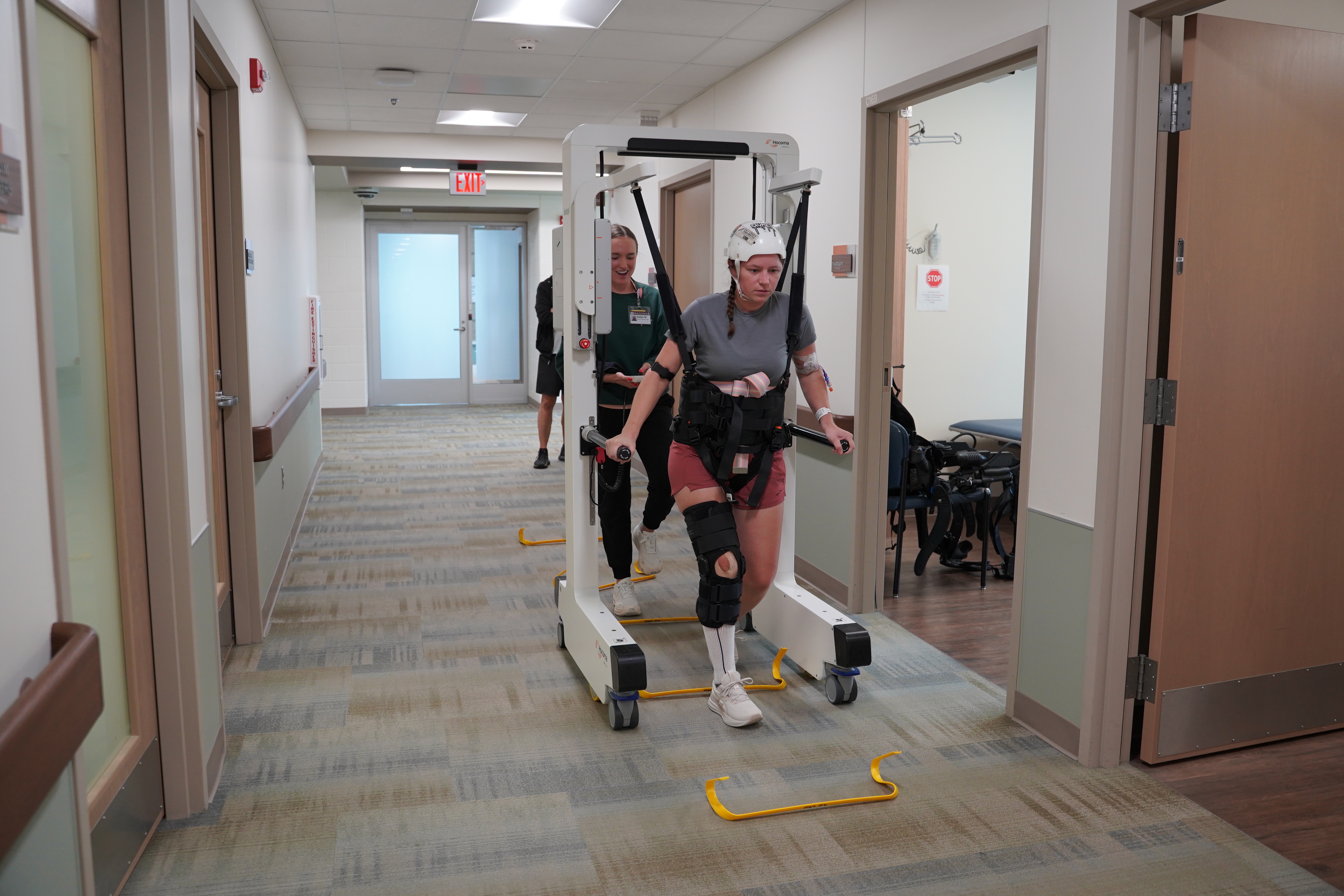
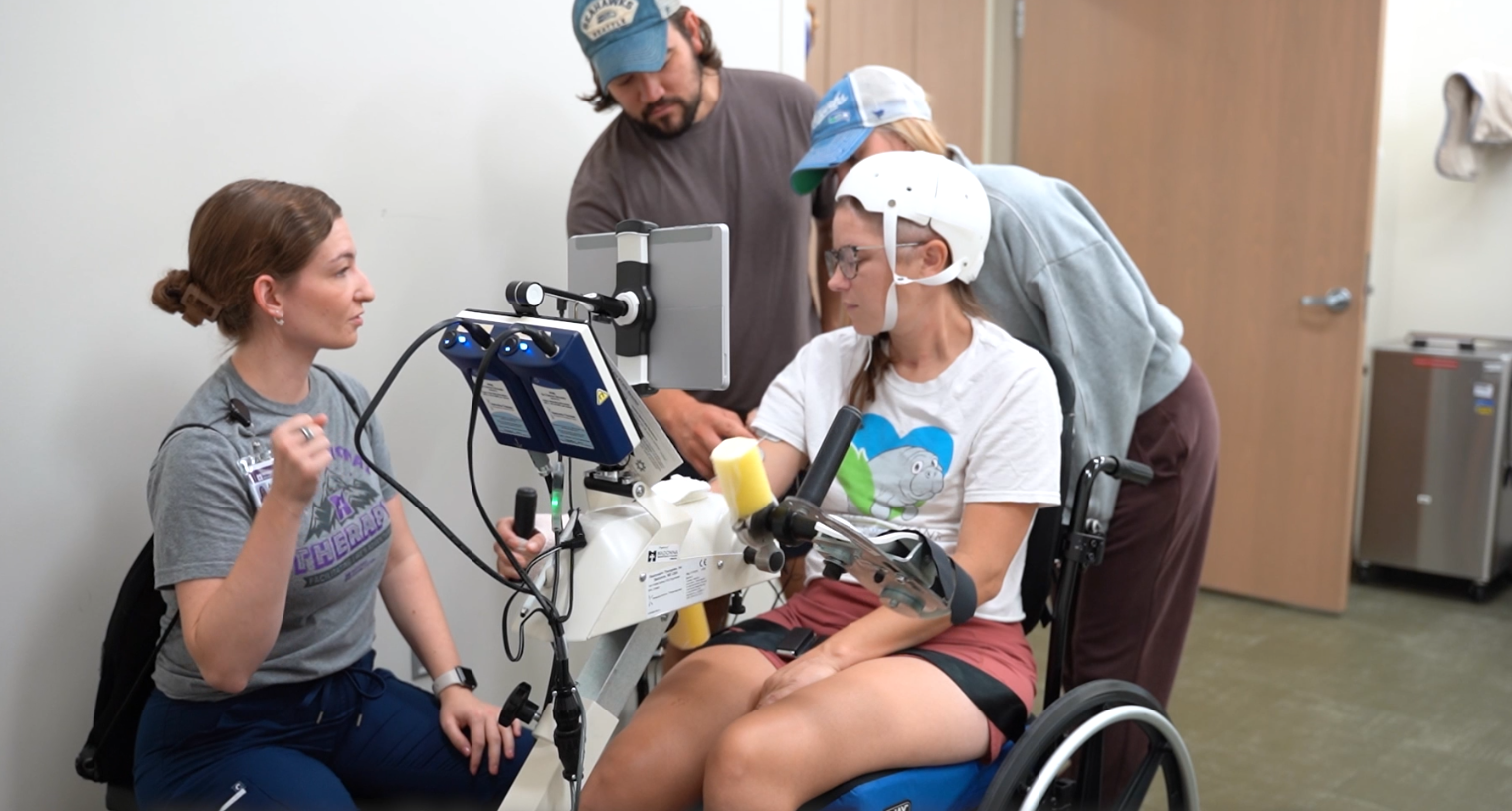
As Grace moved through Madonna’s continuum of care, she worked with her interdisciplinary care team to strengthen her right side, improve her balance and regain independence in everyday activities. Specialized technology, including the ArmeoSpring and Andago body-weight support gait training system, helped provide opportunities to practice new skills in a safe environment while building confidence along the way.
Grace’s care team included her strong support system of family and friends. Therapy encouraged them to be hands-on in her care and recovery. Her father, Ken, said his background as a retired physical therapy assistant was beneficial.
“It can be a blessing and a curse,” Ken said. “I know some of the steps that need to be taken, and as a dad, some days you may push too hard.”
Still, his clinical training allowed him to reinforce therapy techniques outside of scheduled treatment sessions and help teach other friends and family how to support Grace’s recovery.
“Initiating things as they get taught through therapies here, I can follow up on because I’ve done a lot of it in my past,” he said. “It’s good to be retired and have the time to help the process and teach the rest of the family too along the way.”
McDonald said Ken became a valuable extension of the rehabilitation team.
“Sometimes in our sessions, he’s helping her stand and I’m doing more fine motor stuff and working on her arm strength,” McDonald said. “It was like having our own little co-treatments with dad.”
That support system extended beyond just providing physical benefit. Grace’s friends and family constantly filled her room, kept her company on the weekends and brought little bits of home to keep her spirits lifted.
“It’s just really nice to feel supported by them at every level,” Grace said. “Lots of support from my therapists too, and all of it plays a part and is special and keeps me from throwing in the towel.”
With each challenge she overcame, Grace regained faith in her abilities.
“I think the physical progress was pretty easy to appreciate,” Kailyn Allen, PT, DPT, Grace’s physical therapist, said. “But recognizing her progress with her confidence and the trust in herself was really evident.”
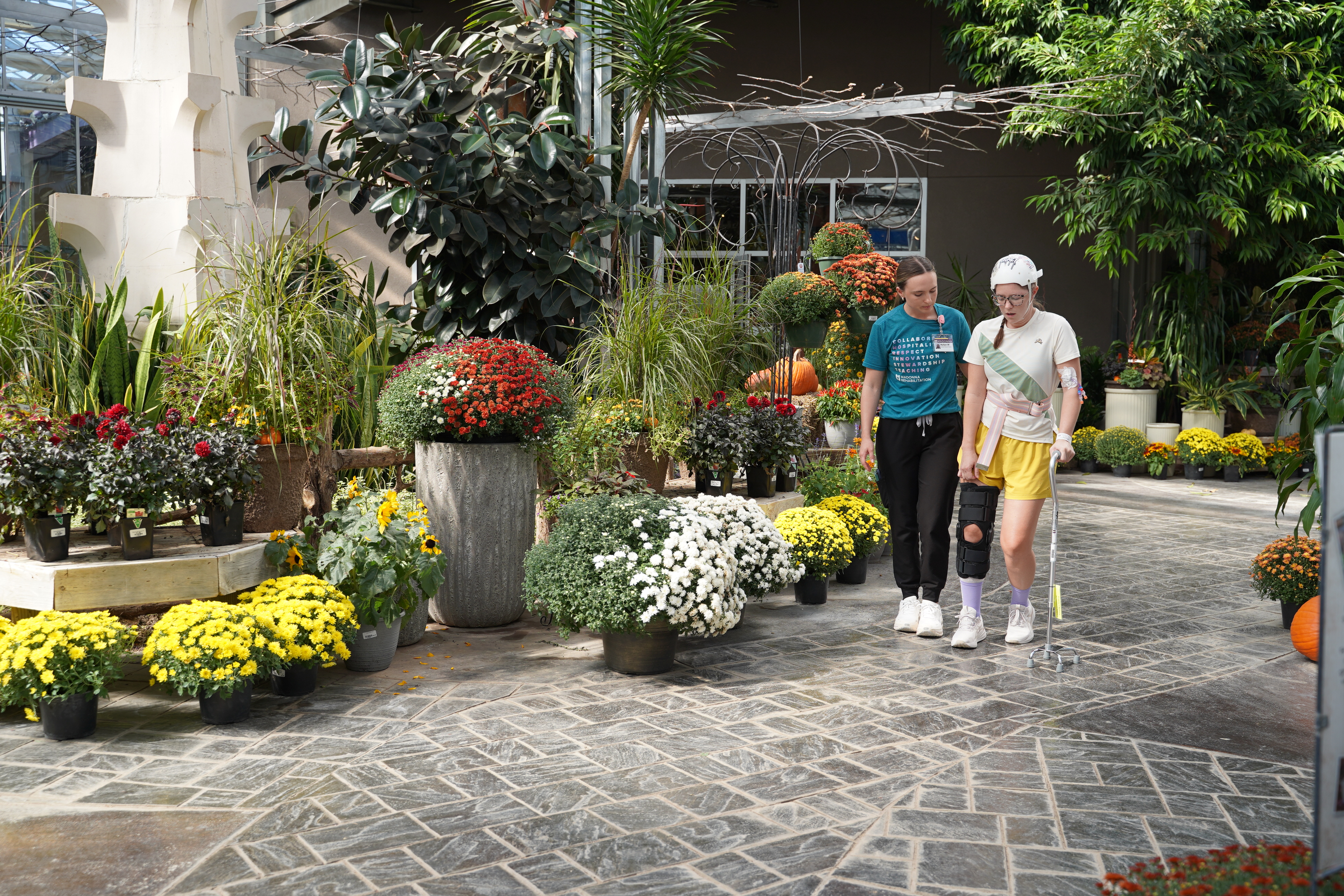
One milestone came during a community outing to Lanoha Nurseries, where Grace could test the skills she had been practicing in therapy in a real-world setting.
“The nursery is just big and has lots of different challenges,” Grace said. “I felt like it was one big challenge course walking around that whole place.”
Even something as simple as stepping on and off a bus became an opportunity to measure progress.
“Walking up and down those bus steps was kind of intimidating,” she said. “But then I did it successfully so that always helps boost my confidence.”
Today, Grace continues her recovery through Madonna’s Rehabilitation Day Program and remains focused on what’s next.
“There have definitely been some hard days,” she said. “But it’s been nice to look back and see this stuff moved forward because we didn’t stop trying.”
For Ken, that lesson may be the simplest way to describe his daughter’s journey.
“That’s the message,” he said. “Never stop trying.”